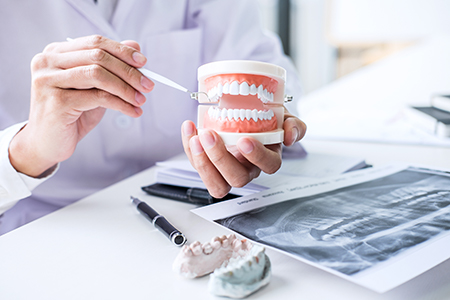
Advances in dental materials and digital techniques have made replacing missing teeth more reliable and natural-looking than ever before. While fixed options such as dental implants and bridgework are excellent solutions in many cases, removable dentures continue to be a dependable way to restore a complete, comfortable smile for a wide range of patients.
At Diamond Head Dental Care, our approach to denture care blends modern craftsmanship with careful attention to individual needs. We focus on secure fit, natural appearance, and long-term function so patients can speak, eat, and socialize with confidence.
Every treatment plan begins with a thorough assessment of oral health, facial proportions, and daily habits. From there, the team recommends prosthetic designs that balance aesthetics, durability, and the practical realities of each patient's lifestyle.
Losing teeth affects much more than the way a smile looks. Gaps in the dental arch alter how the jaw functions, which can change chewing patterns and place uneven pressure on remaining teeth. Over time, these shifts can lead to bite problems, wear on adjacent teeth, and even changes in facial support.
There are also nutritional and social dimensions to consider. Difficulty chewing certain foods may limit dietary choices, and many patients report reduced confidence in social settings when tooth loss makes speaking or smiling uncomfortable. Addressing missing teeth helps restore both practical function and quality of life.
Prompt evaluation and treatment planning help limit long-term changes to the bite and facial tissues. Whether a patient needs to replace a single tooth, several teeth, or an entire arch, a well-designed denture can reestablish proper support for the lips and cheeks and help preserve remaining dental structures.

Removable dentures are custom-crafted oral appliances that rest on the gums and replace missing teeth with lifelike prosthetic teeth set in a supportive base. The base is shaped to follow the contours of the mouth so the appliance distributes chewing forces evenly and feels secure during normal activities.
One of the practical benefits of removable prostheses is their cleanability: patients can remove them for thorough daily cleaning and for overnight rest, which helps maintain the health of the tissues and any remaining natural teeth. This flexibility also simplifies certain maintenance procedures.
Although fixed bridgework and implants provide a permanent attachment in many cases, removable solutions remain highly versatile. They can address the loss of a few teeth with partial dentures or replace an entire arch with a complete denture, offering a predictable path to restore oral function and facial support.
A successful denture begins with careful evaluation of the mouth’s hard and soft tissues, the condition of any remaining teeth, and the relationship between the jaws. These factors determine whether a partial denture or a complete denture is the best choice and guide material and design decisions that affect comfort and longevity.
Partial dentures are designed to fill gaps when some healthy teeth remain. They typically use clasps or precision attachments to stabilize the prosthesis while supporting the adjacent teeth and preventing unwanted drifting. Modern partial frameworks can be fabricated from metal, flexible resins, or hybrid materials to balance strength and appearance.
Complete dentures are used when all teeth in the upper or lower arch are missing or must be removed. These appliances are crafted to restore the vertical dimension and facial contours while enabling efficient chewing. In some cases, immediate dentures are placed at the time of extractions so a patient does not go without teeth during healing; in other situations, a conventional approach allows tissues to heal fully before final fabrication.
Immediate dentures provide an immediate cosmetic solution after tooth removal but often need subsequent relines or adjustments as the tissues remodel. An overdenture can increase comfort and function by using remaining roots or attachments to enhance stability. Implant-supported dentures attach to dental implants for superior retention and are an option when patients seek additional support and reduced movement.
Partial dentures are tailored to preserve remaining teeth and maintain proper alignment. The framework, clasping system, and tooth arrangement are chosen to minimize stress on abutment teeth while achieving a natural appearance. Careful design helps distribute occlusal forces and preserves oral health over time.

Designing a durable, comfortable denture requires more than impression-taking. The process involves assessing jaw relationships, facial aesthetics, and the health of underlying bone and soft tissues. Advanced imaging and diagnostic records help the clinical team visualize how a prosthesis will function in daily life.
When remaining teeth are present, their health and support are evaluated carefully. At times, pre-prosthetic treatment such as extractions or minor tissue shaping is recommended to create an ideal foundation for a prosthesis. These preparatory steps can make a significant difference in fit and long-term comfort.
Material selection and laboratory collaboration are central to predictable outcomes. The dental team selects tooth shapes and shades to complement facial features and works closely with skilled technicians to fabricate a prosthesis that balances strength, realism, and patient comfort. Trial fittings allow adjustments before the final denture is delivered.

Adapting to a new denture takes time and patience. Initial changes may include increased salivation, altered speech, and the need for minor adjustments as the tissues accommodate the appliance. Regular follow-up visits help the team fine-tune fit and relieve any sore spots so daily function becomes comfortable and reliable.
Proper home care keeps a denture looking and performing at its best. Rinsing after meals, gentle daily brushing with a denture brush, and soaking the appliance nightly preserve hygiene and reduce staining. It is also important to maintain the health of any remaining teeth and the underlying tissues by brushing gums and scheduling routine oral exams.
Over time, the jawbone and soft tissues can change shape, which may alter how a denture fits. Relines or adjustments are common maintenance procedures that restore intimate contact and stability. In cases where additional retention is needed, options such as implant attachments or specialized adhesives can improve day-to-day comfort.
Our goal is to help patients enjoy functional, attractive dentures that integrate smoothly into daily life. By combining careful planning, precise fabrication, and attentive follow-up care, the practice supports long-lasting results and confident smiles.
In summary, removable dentures remain a practical and versatile solution for many patients seeking to restore missing teeth. Thoughtful design, individualized care, and routine maintenance ensure these appliances perform well and contribute to overall oral health. If you would like more information about denture options or the treatment process, please contact our office to discuss your needs.
Today, it’s easier than ever to replace missing teeth and achieve natural-looking, durable, and long-lasting results! Depending on a patient’s dental needs, lifestyle, expectations of care, and budget, choices can include conventional fixed bridgework, dental implants, or removable partial and complete dentures. At the office of Diamond Head Dental Care, we’ll discuss all your options in care and answer all your questions as you choose the solution that’s right for you.
With advances in dental materials and technology, today’s dentures are more comfortable and realistic-looking than ever before.
Whether you wear partial or complete dentures, it’s essential to see the dentist for routine care. Besides checking the fit and condition of your dentures and making any necessary adjustments, you’ll also receive a comprehensive exam to check on the health of any remaining teeth as well as the soft and hard tissues in and around the oral cavity.
A same-day denture offers an accelerated design and fabrication process that allows a patient to go from impression taking to denture insertion in a single day.
For patients who don’t want to wait after having teeth extracted, an immediate denture can be inserted the same day your teeth are removed. Sometime later you may need the denture relined to address any changes in its fit once the extraction sites have completely healed.
While no one wants to drop or break a partial or complete denture, accidents do happen. The good news is that in some cases, your partial or complete denture is reparable. It all depends on the extent of the damage. Don’t hesitate to contact our office if you’ve broken or damaged your denture. We’re happy to help.
The simple act of taking your partial denture in and out can cause certain types of metal clasps to loosen over time. When you come in for your checkup visit or contact our office for an adjustment, we’ll assess the fit of your partial and tighten the clasps for improved stability and comfort.
While rebuilding a complete smile is a worthwhile investment, our office is sensitive to the costs involved in dental care. We customize care and will discuss which treatment options address your needs, lifestyle, and budget. How much a new denture will cost depends on the type of the prosthesis, its design, and the materials used to fabricate the supportive base, teeth, and clasps or precision attachments. Dentures that include the placement of dental implants for added retention and stability typically involve additional costs.
If you have dental insurance, your coverage may include a new or replacement set of dentures. Our staff is happy to review your coverage with you to ensure you are maximizing your insurance benefits while minimizing any out of pocket expenses.
At the office of Diamond Head Dental Care, we provide an extensive range of dental services, including the latest and most effective methods to help patients with missing teeth rebuild complete and beautiful smiles. As skilled and experienced professionals, we recognize that every patient is different, and every smile is unique. We’re passionate about what we do and take great pride in providing personalized treatment plans while treating our patients as valued partners in care.
Removable dentures are custom-made oral appliances that replace missing teeth with prosthetic teeth set in a gum-colored base that rests on the oral tissues. The base is shaped to follow the contours of the mouth so the appliance distributes chewing forces evenly and provides support for the lips and cheeks. Properly designed dentures restore chewing function, help guide speech, and reestablish facial contours that change after tooth loss.
Partial dentures fill gaps when some natural teeth remain and typically use clasps or precision attachments to stabilize the prosthesis, while complete dentures replace all teeth in an upper or lower arch. Immediate dentures can be placed at the time of extractions so patients do not go without teeth during healing, although they often need relines as tissues remodel. Over time, maintenance such as relines or adjustments keeps the appliance fitting comfortably and functioning predictably.
Good candidates for removable dentures include patients who have lost one or more teeth and want a predictable, noninvasive way to restore function and appearance. Dentures are often recommended when remaining teeth are not suitable for long-term support of bridges or implants, when patients prefer a removable option, or when medical or anatomical factors limit other treatments. A comprehensive oral evaluation identifies the condition of remaining teeth, the quality of bone and soft tissues, and any health considerations that influence treatment planning.
During the initial consultation the clinical team discusses all viable options and recommends a prosthetic design that balances comfort, durability, and daily needs. Pre-prosthetic treatments such as extractions, minor tissue contouring, or periodontal care may be suggested to create an optimal foundation for a denture. The final recommendation focuses on restoring oral function while preserving the health of remaining structures.
There are several common denture types, including partial dentures that replace a few missing teeth, complete dentures that restore an entire arch, and immediate dentures that are placed at the time of extractions. Partial frameworks can be made from metal, flexible resin, or hybrid materials to balance strength and esthetics, while complete dentures are designed to reestablish vertical dimension and facial support. Each design is chosen to address the specific anatomic and functional needs of the patient.
Additional options include overdentures that use remaining roots or attachments for added stability and implant-supported dentures that attach to dental implants for superior retention and reduced movement. The choice of materials and attachment systems depends on oral health, jaw relationships, and patient preferences regarding maintenance and daily care. Trial fittings and careful selection of tooth shape and shade help create a natural appearance and comfortable function.
Denture fabrication begins with a thorough clinical examination, diagnostic records, and impressions to capture the shape of the jaws and the relationship between them. Advanced imaging and digital or conventional impressions allow the team to plan tooth arrangement and base contours that support speech and chewing. Laboratory technicians then fabricate trial setups and finished prostheses under detailed instructions from the clinical team.
Patients typically attend multiple visits for try-ins and adjustments so tooth position, occlusion, and esthetics can be refined before final delivery. Once the denture is delivered, follow-up appointments address any sore spots or functional issues and ensure the appliance fits comfortably as tissues adapt. Good communication between the patient, clinician, and laboratory is essential for predictable results and long-term comfort.
Adapting to new dentures varies by individual but commonly takes several weeks for basic comfort and a few months for complete adaptation. Early changes often include increased salivation, mild sore spots, and alterations in speech as the oral tissues become accustomed to the appliance. Most patients find that practicing speech, such as reading aloud, and gradually increasing chewing activity accelerates the adjustment period.
Initial follow-up visits are important to fine-tune fit and relieve pressure areas that can slow adaptation. Starting with soft foods and cutting items into smaller pieces helps rebuild chewing confidence while reducing strain on the denture. If persistent discomfort or difficulty speaking continues beyond a reasonable adaptation period, additional evaluation and adjustments can improve outcomes.
Daily denture care includes rinsing the appliance after meals to remove loose food, brushing it gently with a denture brush and nonabrasive cleaner, and soaking it overnight in a recommended solution to keep the material hydrated. Avoid using hot water, which can warp acrylic bases, and never use abrasive household cleaners or whitening toothpaste that can scratch prosthetic teeth. Handling dentures over a basin of water or a soft towel reduces the risk of accidental damage.
It is also important to maintain the health of remaining teeth and oral tissues by brushing gums, tongue, and any natural teeth before putting the denture back in place. Regular dental examinations allow the clinical team to monitor tissue health and provide professional cleaning or adjustments as needed. Proper daily care preserves esthetics, reduces staining, and supports oral health over time.
Dentures require periodic maintenance because the jawbone and soft tissues change shape with age and after extractions, which can affect fit and retention. Common maintenance procedures include relines to restore intimate contact, adjustments to relieve sore spots, and repairs for fractures or worn teeth. Scheduling routine checkups helps detect fit issues early and prevents complications that arise from ill-fitting appliances.
Patients should contact the office promptly if they experience persistent soreness, loosening, or a change in function, as timely service can often avoid more extensive treatment. In some cases, attachments may be added or implant support considered to improve stability if conventional dentures become insufficient. The goal of maintenance is to preserve comfort, chewing efficiency, and tissue health throughout the lifespan of the prosthesis.
Implant-supported dentures use dental implants as anchors to improve retention, stability, and chewing efficiency compared with conventional removable appliances that rest on the gums. Attachments on the denture engage abutments on the implants to reduce movement and provide a more secure connection, which can be particularly helpful for lower-arch prostheses where stability is often more challenging. This design can make eating and speaking feel more natural for many patients.
Not every patient is a candidate for implant-supported solutions; suitability depends on overall health, available bone, and treatment goals established during clinical evaluation. When implants are appropriate, they can help preserve bone by transmitting functional forces to the jaw and reducing the rate of resorption compared with unsupported dentures. The clinical team discusses implant options alongside other prosthetic choices to determine the best long-term plan for oral function and comfort.
Yes. Well-designed dentures restore the vertical dimension and provide support for the lips and cheeks, which can reverse the collapsed appearance that sometimes accompanies tooth loss. By replacing missing teeth and reestablishing proper bite relationships, dentures help distribute chewing forces more evenly and reduce abnormal wear on remaining teeth. Improved oral function often leads to better nutritional choices and greater ease when speaking and smiling.
Esthetic considerations such as tooth shape, shade, and arrangement are selected to harmonize with facial features so the prosthesis looks natural and attractive. Trial fittings allow for aesthetic refinements before the final denture is delivered, ensuring the result complements the patient's face and delivers reliable function. Regular adjustments and maintenance help preserve that appearance and performance over time.
At the initial appointment the clinician performs a comprehensive oral exam, reviews medical and dental history, and takes diagnostic records such as impressions and bite registrations to plan the prosthesis. Imaging or additional tests may be recommended to evaluate bone and soft-tissue conditions that influence design choices. The team explains the recommended prosthetic options and outlines the sequence of visits for try-ins, delivery, and follow-up care.
During fabrication and fitting appointments you can expect trial setups to evaluate tooth position, esthetics, and occlusion before the final prosthesis is made. After delivery the practice schedules follow-up visits to adjust fit, address sore spots, and ensure the denture functions comfortably in daily life. At Diamond Head Dental Care in Honolulu the goal is to provide careful planning, precise fabrication, and attentive follow-up so patients achieve long-lasting comfort and function.