3045 Monsarrat Avenue
Suite 7
Honolulu, HI 96815

Monday
7:00 am - 7:00 pm
Tuesday
7:00 am - 7:00 pm
Wednesday
7:00 am - 7:00 pm
Thursday
7:00 am - 7:00 pm
Friday
7:00 am - 7:00 pm
Saturday
8:00 am - 5:00 pm
Sunday
8:00 am - 5:00 pm

Emergency Treatment

When a Dental Emergency Happens: What to Do First

Dental emergencies often arrive without warning. The first priority is to keep calm and take simple steps that reduce pain and protect the damaged area while you arrange to see a clinician. Rinse the mouth gently with warm water to clear debris and blood. Apply a cold compress to the cheek (outside the mouth) to limit swelling and ease discomfort. Avoid placing heat directly on an injured area, which can increase inflammation.

If a tooth has been knocked out, handle it carefully by the crown—never by the root—and, if possible, try to keep it moist. Placing the tooth in a container of milk or in the patient’s saliva can help preserve it during transport. For a broken crown or large chip, collect fragments and bring them with you; sometimes pieces can be reattached or used to guide reconstruction.

Severe swelling, difficulty breathing or swallowing, or high fever with oral pain can signal a spreading infection and should be treated as urgent medical issues. In those situations, seek immediate professional care. Even when symptoms seem manageable, prompt assessment is important: timely treatment reduces the chance of complications and improves long-term outcomes.

Typical Urgent Problems We Treat

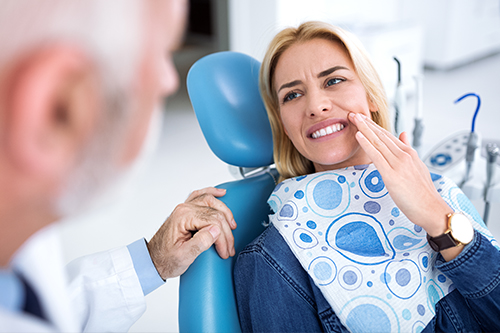
Toothaches are among the most common reasons patients seek emergency care. Pain can stem from decay that has reached the nerve, a cracked tooth, or an infection around the root. Abscesses — localized collections of pus — often present with throbbing pain, swelling, and sometimes fever; these require rapid attention to control infection and preserve oral structures.

Traumatic injuries include chips, fractures, and avulsions (complete tooth displacement). Dental restorations such as crowns and fillings can become loose or dislodged, exposing sensitive tooth structure. Denture breakage, painful or impacted wisdom teeth, and sudden, unexplained soft-tissue lesions also bring patients into urgent care. Additionally, acute periodontal problems — rapid gum swelling or bleeding — can signal an infection that needs immediate control.

Problems on the soft tissues of the mouth, including the tongue, lips, cheeks, or palate, may be bacterial, viral, or fungal in origin. While most soft-tissue issues are manageable, persistent or rapidly worsening signs merit professional evaluation to rule out serious infection or other conditions that need targeted treatment.

How We Evaluate and Prioritize Emergency Visits

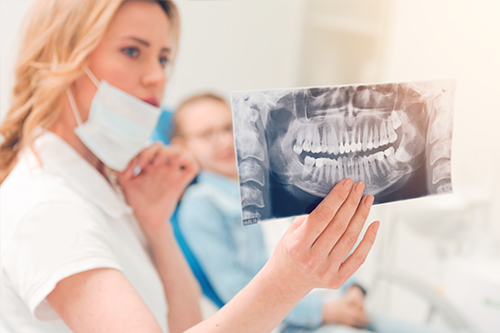
When you arrive for emergency care, our first step is a focused assessment to identify immediate threats to health and determine the right sequence of treatment. That assessment includes a clinical exam, a thorough history of how and when symptoms began, and targeted diagnostic imaging when needed. Modern digital radiography and, when indicated, CBCT imaging help us quickly visualize underlying damage, infections, or fractures that aren’t apparent on the surface.

Pain control and infection containment are central to our initial approach. Depending on the situation, we may provide local anesthesia, prescribe appropriate antimicrobial medication, or perform drainage for an abscess. Stabilizing a damaged tooth or restoration to prevent further injury is a common immediate step. Throughout this process we communicate options clearly so patients understand what we’re doing and why.

Safety and comfort guide every decision. Our team follows strict sterilization protocols and evidence-based clinical pathways to ensure efficient, predictable care. Where dental issues intersect with broader health concerns — for example, when systemic illness complicates treatment — we coordinate with primary care providers or specialists to deliver safe, integrated care.

Immediate Treatments and Pathways to Recovery

Treatment during an emergency visit focuses on stabilization and relief. For a cracked or chipped tooth we may smooth rough edges and use dental bonding to protect exposed dentin. If a filling or crown has come loose, temporary recementation or repair can relieve pain and prevent further damage until a permanent restoration is placed. In cases where the pulp is inflamed or infected, root canal therapy often allows the natural tooth to be preserved.

When a tooth cannot be saved or is creating recurrent infection, extraction may be the most appropriate choice. Our team takes care to plan extractions so that subsequent restorative options remain available. For many patients, that next phase includes planning for a long-term solution such as an implant-supported restoration, a fixed bridge, or removable prosthetics, depending on clinical needs and preferences.

Soft-tissue infections may require drainage and antimicrobial therapy, along with specific instructions to support healing. For traumatic dental injuries, reattachment, splinting, or temporary protective restorations may be used to secure teeth while definitive treatment is scheduled. Throughout recovery, we emphasize conservative, evidence-based solutions that aim to restore both function and appearance.

Aftercare, Follow-Up, and Reducing Future Risk

Proper aftercare helps prevent setbacks and speeds recovery. We provide clear, written instructions covering pain management, diet modifications, wound care, and oral hygiene practices tailored to your situation. For many procedures, short-term soft diets and gentle brushing around the treated area significantly reduce discomfort and promote healing. Follow-up appointments allow us to monitor progress and transition from temporary measures to permanent restorations.

Preventing future emergencies is an important component of our care. Protective strategies such as custom night guards for clenching, sports mouthguards for contact activities, and routine maintenance visits help identify vulnerable teeth before they become crises. For patients with recurring wisdom-tooth issues or recurrent infections, proactive planning can eliminate repeated urgent visits and preserve oral health over the long term.

We also emphasize the importance of recognizing warning signs early — increasing pain, swelling, drainage, fever, or changes in bite — so you can seek care promptly. Early intervention is often less invasive and more successful than delayed treatment, and it minimizes the chance of complications that can affect overall health.

Our experienced team at Diamond Head Dental Care is committed to timely, skillful emergency treatment that protects your comfort and oral health. If you’re facing a dental emergency, contact us to arrange an evaluation — we’ll prioritize your needs and recommend a clear, practical plan for relief and recovery.

Frequently Asked Questions

What is a dental emergency?

+
Diamond Head Dental Care

Toothaches

Pain is your body's way of signaling that something is not quite right and though there are many reasons for oral pain, one of the most common complaints and reasons for seeking urgent dental care is a toothache. Whether you simply need a dental filling, a crown, or require a root canal procedure to save your tooth, we'll alleviate your discomfort and restore the look and function of the involved tooth.

Diamond Head Dental Care

Dental Trauma

Dental trauma can result in a defect as minor as a small chip in tooth enamel to a more extensive and painful crack or fracture. With sufficient force, a tooth can even be displaced or completely knocked out of its socket. With prompt emergency care, many injured teeth can be restored and saved.

Diamond Head Dental Care

Wisdom Teeth

The last teeth in your mouth to develop, wisdom teeth often do not have enough room to fully erupt or may be positioned in the wrong direction. These issues can affect your dental health as well as overall well-being. Our office provides skilled care to address the complications caused by problematic wisdom teeth.

Diamond Head Dental Care

Broken or Lost Dental Appliances

A broken or lost dental prosthesis or restoration can cause embarrassing gaps in your smile as well as compromise your ability to eat and speak with ease. If you've lost or broken a dental filling, denture, crown, or other dental appliance, you can rely on our office to perform a prompt repair or provide a durable and cosmetically pleasing replacement as quickly as possible.

At the office of Diamond Head Dental Care, emergency appointments are always available. Of course, in addition to providing top treatment for dental emergencies, we also welcome patients searching for high quality and affordable care. We offer a complete range of the latest and best cosmetic and dental services for every member of your family.

How long do I have to wait for an emergency dental appointment?

+

If you are suffering from a toothache or have sustained a dental injury, it is important to visit the dentist as soon as possible before more serious complications arise. Whether your dental emergency is painful, if it affects the appearance of your smile, or if you suspect that an infection is present, our office will make every effort to see you as promptly as possible for care.

At the office of Diamond Head Dental Care, we treat your dental emergency as our top priority. Our caring team will respond to your emergency call right away, making sure you get the gentle, state-of-the-art care you need without delay.

As your trusted emergency dentist in Honolulu, we provide the highest quality of care to mitigate the stress, anxiety, and discomfort of dental problems. Our dedicated team will help you start feeling better as soon as we receive your emergency call.

Do I need to go to the emergency room or hospital?

+

At the office of Diamond Head Dental Care, we provide skilled and experienced care to effectively resolve a broad range of dental emergencies, restoring a patient's oral health while protecting their overall wellbeing.

However, even so, specific dental emergencies pose significant threats to one's health. These situations require immediate, emergency room care. Serious and potentially life-threatening dental emergencies include significant oral and facial trauma such as jaw fractures, deep wounds or lacerations to the face and mouth, an abscess or infection that causes widespread facial or submandibular swelling, or affects breathing and swallowing.

How much does emergency dental treatment cost?

+

At the office of Diamond Head Dental Care, we provide prompt, skilled, and experienced care to address dental emergencies. We understand that finances are always a concern and do our best to provide options in care that are both affordable and respect your budget.

Once we've had the opportunity to examine your smile, we can give you a clear picture of any existing dental issues, along with a quote for what the cost of treatment will be. The cost of care all depends upon the extent and complexity of issues affecting the health or appearance of your smile and the types of procedures that are required.

To help alleviate any additional stress or delay, you can count on our staff to work with you to optimize coverage for your dental care and to minimize your out-of-pocket expenses. For patients without insurance, we strive to make things easier as well! We invite you to visit our financial information page or speak to an expert in our business office.

Why choose us for your emergency dental treatment?

+

Dental emergencies are often painful and debilitating experiences. For this reason it's important to have an emergency dentist in Honolulu, who welcomes patients with urgent dental needs while providing the prompt care required to restore oral health.

Here are just some of the reasons why so many patients choose our office for emergency dental care and to meet their family's dental needs:

  • Skilled and compassionate care for patients of all ages
  • Ultra-modern office designed with patient comfort in mind
  • Professional team experienced in all facets of care
  • State-of-the-art diagnostic and treatment technology
  • Precise and gentle treatment using leading-edge systems of care
  • Careful attention paid to patient input and treatment expectations
  • Detailed explanations of treatment options and every step in care
  • Provision of a broad range of dental services and emergency procedures
  • Recognizes the specific needs of each patient and the unique requirements of every smile
  • Provide patients with the education and tools to establish a strong foundation for optimal oral health

We're dedicated to helping patients enjoy good oral health and beautiful smiles. We look forward to helping you keep your smile in tip-top condition. You can rest assured that our highly skilled office team will provide you the highest quality of state-of-the-art dental care and have you smiling again in no time!

To make an appointment or for more information on our office and the many state-of-the-art services we provide, give us a call today.

What should I do immediately after a dental injury?

+

Stay calm and take steps that reduce pain and protect the affected area while you arrange care. Rinse your mouth gently with warm water to remove debris and blood, and apply a cold compress to the outside of the cheek to limit swelling. Avoid placing heat directly on the injured area, and do not attempt to push a displaced tooth back into place if you feel resistance.

If bleeding is significant, apply firm but gentle pressure with clean gauze or a tea bag and seek prompt professional attention. Collect any broken tooth fragments or pieces of restoration and bring them with you, as they can sometimes be helpful in repair. Quick, measured action improves the chance of saving damaged teeth and reduces the risk of complications.

How should I care for a knocked-out permanent tooth?

+

Handle the tooth only by the crown and avoid touching the root, which can damage cells needed for reattachment. If the tooth is dirty, gently rinse it with water without scrubbing, and try to keep it moist by placing it in a container of milk or in the patient’s saliva if possible.

Time is critical for reimplantation, with the best outcomes when treated within an hour. If you cannot reinsert the tooth safely, transport it to the dental office in a suitable liquid and seek immediate care so the clinician can evaluate reimplantation and stabilization options.

When is facial swelling or fever a dental emergency?

+

Rapidly increasing facial swelling, difficulty breathing or swallowing, or the presence of fever with oral pain can indicate a spreading infection and should be treated as an urgent medical concern. These signs suggest the infection may be moving beyond the tooth to surrounding tissues and potentially affecting the airway.

In such cases, seek immediate professional care and, if necessary, emergency medical services to protect the airway and control systemic infection. Early intervention with drainage, appropriate antimicrobial therapy, and coordination with medical providers reduces the risk of serious complications.

What types of problems typically require emergency dental treatment?

+

Common urgent issues include severe toothaches, dental abscesses, traumatic injuries such as chips, fractures, or avulsions, and loose or dislodged crowns and fillings that expose sensitive tooth structure. Soft-tissue injuries to the lips, tongue, cheeks, or palate and sudden, unexplained oral bleeding also bring patients for emergency care.

Other urgent concerns can include painful impacted wisdom teeth, recurrent infections, and acute periodontal flare-ups with rapid swelling or bleeding. Any condition that causes significant pain, uncontrolled bleeding, or risks spreading infection should be evaluated promptly to prevent further damage.

How do clinicians evaluate and prioritize emergency dental visits?

+

Evaluation begins with a focused history and clinical examination to identify immediate threats to health, followed by targeted diagnostic imaging when needed. Digital radiography and, when indicated, CBCT imaging help clinicians visualize fractures, root involvement, and hidden infection that are not apparent on the surface.

Clinicians prioritize cases based on airway safety, severity of infection, and intensity of pain, addressing life- or tooth-threatening issues first. Communication about findings and available treatment pathways helps patients understand next steps and expected timing for definitive care.

What immediate treatments can relieve pain and control infection?

+

Immediate care focuses on stabilizing the situation and reducing pain, often using local anesthesia, drainage for abscesses, and short-term antimicrobial therapy when appropriate. Stabilizing a damaged tooth or temporarily recementing a crown can protect exposed dentin and prevent further injury until a permanent restoration is placed.

For inflamed or infected pulps, pulpectomy or emergency root canal therapy may preserve the natural tooth, while soft-tissue injuries may require debridement and wound care. Throughout emergency treatment, clinicians emphasize safety, pain control, and measures that allow predictable follow-up and recovery.

When is extraction the best option during an emergency visit?

+

An extraction may be recommended when a tooth is irreparably fractured, the tooth is a persistent source of infection, or conservative treatment is unlikely to succeed. Choosing extraction in those cases can immediately eliminate the source of pain and infection and prevent further complications.

When extraction is performed, care is taken to preserve options for future restoration, such as implant placement or fixed prosthetics, and to plan follow-up care to restore function and appearance. Your clinician will explain the rationale for extraction and outline the expected recovery and next steps.

What should I expect after emergency dental treatment?

+

Aftercare instructions typically cover pain management, diet modifications, wound care, and oral hygiene measures tailored to the procedure you received. Short-term soft diets and gentle brushing around treated areas help minimize discomfort and support healing in the days following treatment.

Follow-up appointments allow the dental team to monitor healing, transition from temporary measures to definitive restorations, and address any concerns that arise. Contact your dental provider if you experience increasing pain, swelling, fever, or changes in bite, as these can signal the need for further evaluation.

How can I reduce the risk of future dental emergencies?

+

Preventive strategies such as custom night guards for clenching, sports mouthguards for contact activities, and routine dental maintenance visits help identify vulnerable teeth before they become urgent problems. Consistent home care and early treatment of decay or cracked teeth significantly lower the chance of sudden, severe pain or infection.

For patients with recurrent wisdom-tooth issues or chronic infections, proactive planning and timely intervention can prevent repeated emergency visits. Discussing individual risk factors with your dental team allows for a tailored prevention plan that supports long-term oral health.

How does Diamond Head Dental Care handle same-day emergency appointments?

+

Our Honolulu practice offers extended hours and same-day emergency appointments to prioritize patients with urgent dental needs and reduce delays in care. We triage incoming calls and incoming patients to assess urgency, provide immediate pain control measures, and schedule definitive treatment as clinically appropriate.

Within the emergency visit we provide focused evaluation, targeted imaging when necessary, and clear communication about recommended next steps. When dental issues intersect with broader health concerns, we coordinate with medical providers to ensure safe, integrated care and a smooth path to recovery.

We Insurance! All PPO Dental Insurance Plans ACCEPTED!