3045 Monsarrat Avenue
Suite 7
Honolulu, HI 96815

Monday
7:00 am - 7:00 pm
Tuesday
7:00 am - 7:00 pm
Wednesday
7:00 am - 7:00 pm
Thursday
7:00 am - 7:00 pm
Friday
7:00 am - 7:00 pm
Saturday
8:00 am - 5:00 pm
Sunday
8:00 am - 5:00 pm

Invisalign®

Invisalign® has changed how many people approach orthodontic care: it blends modern digital planning with discreet, removable aligners so you can pursue tooth movement without dramatically changing your daily routine. This approach is engineered to be minimally intrusive while delivering predictable tooth movement guided by a clear, physician-directed plan. For many adults and teens, clear aligners provide an effective route to improved alignment without the visibility of traditional brackets and wires.

How clear aligners are planned and delivered

Treatment begins with a precise digital capture of your teeth and bite. These digital records allow your dental team to visualize current alignment and map a sequence of incremental movements that will guide teeth into the intended positions. The entire treatment is planned from start to finish so you and the clinician can see the proposed outcome before the first aligner is ever made.

From the digital scan, a custom series of transparent aligners is fabricated. Each aligner is manufactured to apply gentle, targeted forces to specific teeth for a limited time, usually a couple of weeks, after which the next aligner in the sequence takes over. This stepwise progression is what produces measurable, controlled movement while maintaining comfort and function.

Because the plan is established in three dimensions, clinicians can anticipate how different types of tooth movement—tilt, rotation, intrusion, extrusion—will interact throughout treatment. The workflow emphasizes predictability: staging tooth movements in the right sequence reduces unnecessary adjustments and helps make progress consistent and measurable.

Modern imaging and custom aligner fabrication combine to create an individualized path to a straighter smile.

What to expect during treatment

After your initial consultation and scan, your clinician will review the treatment plan with you and explain the projected timeline and milestones. Most patients change aligners on a regular schedule, and periodic check-ins with the doctor ensure progress stays on track. These visits also give your clinician the opportunity to make small refinements if needed based on how your teeth respond.

Because aligners are removable, you maintain greater flexibility for eating and for daily oral hygiene. This can make it easier to keep teeth and gums healthy throughout treatment, reducing the risk of decay and inflammation that can sometimes accompany fixed appliances. Still, wearing aligners as instructed is essential—consistent wear is the primary driver of efficient, successful results.

Comfort is also a common advantage: aligners are formed from smooth, biocompatible materials that often cause less soft-tissue irritation than brackets and wires. Mild soreness is typical when switching to a new aligner as teeth adjust, but this usually subsides within a few days and is a sign that planned tooth movement is taking place.

Throughout treatment, your clinician monitors alignment progression against the original plan. If adjustments become necessary, the clinical team can modify the sequence or incorporate small auxiliary features to improve control, all while maintaining the overall strategy laid out at the start.

Clinical capabilities and ideal candidates

Clear aligner systems are suitable for a broad range of alignment issues, from minor cosmetic rotations to more involved bite corrections. Advances in planning software and attachment techniques have expanded the ability of aligners to manage complex movements with increasing precision. However, clinicians evaluate each case individually and recommend the most appropriate modality based on the patient’s oral health, skeletal relationships, and treatment goals.

Ideal candidates are committed to following the prescribed wear schedule and maintaining excellent oral hygiene. Because predictable outcomes rely on patient compliance, clinicians prioritize candid discussions about expectations and responsibilities during treatment. When these elements are in place, many patients find clear aligners to be a highly effective and patient-friendly option.

For cases that require multidisciplinary input—such as those involving restorative dentistry or surgical considerations—the aligner plan can be coordinated with other treatments. This integrative approach helps align tooth movement with broader restorative goals so that function, esthetics, and long-term health are addressed together.

In the image, two individuals are engaged with a tablet displaying an X-ray, with one person holding the tablet and another showing the screen to them, both appear to be in a medical setting.

Initial consultation and planning session

Your first appointment focuses on a thorough assessment: digital scans, photographic records, and a discussion of your objectives. The clinician will explain how aligner therapy can address your specific alignment needs and outline what a successful outcome looks like for you.

A man and woman in a medical setting, with the man standing behind a patient seated in a chair with an open mouth, examining teeth  they are surrounded by dental equipment and technology.

Precision scanning and previewing results

A fast intraoral scan captures the exact shape of your teeth and gums, eliminating the need for traditional impressions in most cases. Using that data, your clinician can generate a visual preview of how teeth will move through treatment so you know the projected outcome in advance.

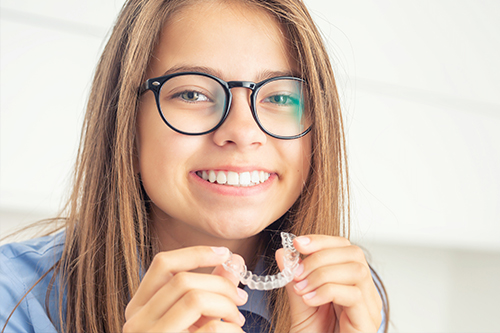
A young girl wearing glasses, smiling at the camera with braces on her teeth.

Custom fabrication with clinical oversight

Each set of aligners is fabricated to match the precise prescription determined during planning. Attachments, if recommended, are placed to improve control over specific tooth movements. The result is a customized appliance sequence that reflects your clinician’s treatment strategy.

A woman with a smile holds up a hand with a peace sign gesture against a brick wall background.

Ongoing care and finalizing your new alignment

From delivery of the first aligners through the final refinements, your clinician provides periodic evaluations to confirm progress. When the active phase concludes, retention protocols are discussed to help preserve the new tooth positions over the long term.

Educational videos and clinical demonstrations

Browse the videos below for visual explanations of aligner mechanics, common treatment steps, and professional perspectives on planning and oversight.

As a registered system developed by Align Technology, Inc., Invisalign® reflects decades of iterative research and large-scale clinical data that inform aligner design and treatment protocols. This background supports a reliable, clinician-driven process focused on consistent, planned tooth movement.

At Diamond Head Dental Care, we prioritize clear communication and evidence-based planning when recommending aligner therapy. If you're curious whether this approach fits your needs, we encourage you to reach out—our team can walk you through the diagnostic process and explain what to expect from an individualized treatment plan.

*Invisalign® is a registered trademark of Align Technology, Inc.

Frequently Asked Questions

I want to straighten my teeth but I don't want metal braces. What are the alternatives?

+

There are many options for patients who want to avoid metal braces! The most popular alternative orthodontic treatment is Invisalign®, which are clear plastic aligners designed to straighten teeth. After an examination of your teeth, your dentist will determine which option is best suited to your wants and needs.

Is Invisalign® expensive?

+

According to the Invisalign® website, the cost for treatment is approximately the same as the cost for metal braces. A portion of this cost may be covered by your insurance. Please call us to set up a consultation and discuss potential payment plan options.

How does Invisalign® work?

+

The first step is to schedule a consultation with your doctor, so they can devise a treatment plan that is best suited to your individual dental needs. Once approved, you will receive your first set of aligners. Your doctor will then regularly monitor the movement of your teeth and new aligners will be ordered according to the progress made in your treatment plan.

What is Invisalign® made of?

+

Invisalign® aligners are made of clear, flexible plastic. The company received a patent for this material – SmartTrack® – to be used exclusively for Invisalign treatment purposes. These aligners are FDA approved and nearly invisible!

How long does Invisalign® treatment take?

+

Your doctor will give you an estimate regarding how long your Invisalign® treatment should take, which will depend on your specific needs. The average length of time for treatment is approximately 12-18 months. However, some patients may see results far sooner. Remember to wear your aligners exactly as instructed by your doctor to obtain the best results.

Are Invisalign® results permanent?

+

Your doctor will most likely recommend that you wear retainers following your Invisalign® treatment. This is a precaution that will prevent your teeth from shifting back to their original positioning. It is important to follow your doctor's instructions exactly to ensure long-lasting results.

How often must I wear my aligners?

+

You must wear your aligners for up to 22 hours daily. You may remove them for eating, drinking and regular oral hygiene.

Are there any restrictions to what I can eat while in treatment?

+

No. Unlike braces, you may eat whatever you like as long as you remove the aligners before eating. Prior to placing the aligners back on, it is important to brush your teeth and the aligners after you eat.

Will wearing the aligners affect my speech?

+

Like any orthodontic treatment, there is a short adjustment period. The more you speak with the aligners on, the quicker you will adjust.

Is there any discomfort with Invisalign® treatment?

+

There will be some pressure and minor discomfort for a day or two after each initial insertion. This is a sign that your teeth are moving sequentially into their final position.

Can I chew gum?

+

It is recommended that you remove your aligners prior to chewing gum as the gum will stick to the aligners.

Can I smoke with the aligners in?

+

We discourage smoking with aligners as the cigarette smoke will tend to discolor them.

How do I keep my aligners clean?

+

Brushing them with toothpaste will keep them fresh and clean.

How often do I see an orthodontist while wearing Invisalign®?

+

Regular office visits are every five to six weeks. This will ensure that your Invisalign treatment is progressing as planned.

What happens after my treatment is complete? Do I need retainers?

+

All orthodontic patients are instructed to wear their retainers at night indefinitely. Sleeping with your retainers in at night will ensure a healthy bite and maintain the new position of your teeth.

Does Invisalign work for kids?

+

Yes, if their teeth, including second molars, have grown in completely.

What is Invisalign® and how does it work?

+

Invisalign® is a clear aligner system that straightens teeth using a series of custom-made, removable trays. Each tray applies gentle, controlled forces to specific teeth for a limited time before the next tray advances the plan. The sequence of trays is created from a three-dimensional digital treatment plan that maps each step from the current position to the intended outcome.

The entire process is clinician-directed, meaning a dentist or orthodontist defines the tooth movements and monitors progress. Treatment relies on patient compliance with the prescribed wear schedule to achieve predictable results. At Diamond Head Dental Care, clinicians combine digital imaging with clinical judgment to develop individualized plans for patients considering aligner therapy.

How is an Invisalign® treatment plan created?

+

The treatment plan begins with a precise digital capture of your teeth and bite using intraoral scanning or diagnostic records. Those digital models are used to visualize current alignment and to simulate a staged sequence of tooth movements in three dimensions. This allows both the clinician and the patient to preview the projected outcome and to make informed decisions before aligner fabrication begins.

Based on the planned movements, a series of transparent aligners is fabricated to match the prescribed progression. Attachments or auxiliaries may be specified to improve control for particular tooth movements. The clinician reviews the proposed stages and may refine the plan to align with restorative or functional treatment goals.

What should I expect during the course of Invisalign® treatment?

+

Your initial visit will include a consultation, diagnostic scans, and an explanation of the treatment timeline and milestones. Patients typically wear each aligner for a set interval, changing to the next tray as instructed, and schedule periodic check-ins so the clinician can monitor movement and make adjustments if needed. Mild soreness when switching trays is common and generally subsides within a few days as teeth adapt to the new aligner.

Because aligners are removable, patients maintain normal eating habits and can continue thorough oral hygiene routines, which helps reduce the risk of decay and gum inflammation during treatment. Consistent wear is essential; inadequate wear can slow progress or require refinements. The clinician documents progress against the original plan and may order additional aligners for fine-tuning when indicated.

Who is a good candidate for Invisalign®?

+

Many adults and teens with a range of alignment issues can be treated with clear aligners, including mild to moderate crowding, spacing, and certain bite discrepancies. Clinicians evaluate each case for dental health, skeletal relationships, and treatment goals to determine whether aligners are an appropriate choice. Ideal candidates are committed to wearing aligners for the prescribed daily hours and maintaining excellent oral hygiene.

Some complex cases may require alternative or combined approaches that include braces, restorative work, or surgical input. For multidisciplinary situations, the aligner plan can be coordinated with other treatments to address function and esthetics together. Open discussion about expectations and responsibilities helps ensure that patients choose the modality best suited to their needs.

How long does Invisalign® treatment typically take?

+

Treatment duration varies according to the complexity of the case and the specific movements required, so timelines are individualized during the planning phase. Many straightforward cases can be completed within several months, while more complex tooth movements or comprehensive corrections may require a year or longer. The clinician provides a projected timeline during the consultation and updates that estimate as treatment progresses.

Adherence to the recommended wear schedule is one of the primary factors that influence how quickly planned movements occur. Regular follow-up appointments allow the clinician to confirm progress and implement refinements if tooth response differs from the initial prediction. If refinements are needed, additional aligners are fabricated to address the outstanding movements.

How should I care for my aligners and teeth during treatment?

+

Keep aligners clean by rinsing them after removal and brushing them gently with a soft brush using water; avoid harsh chemicals and hot water that can deform the plastic. Remove aligners for eating and drinking except for plain water, and always brush and floss before reinserting them to minimize the risk of staining or decay. Store aligners in their protective case when not in use to prevent loss or damage.

Maintain routine dental hygiene with twice-daily brushing and daily flossing, and attend regular professional cleanings and checkups as advised by your clinician. If you notice persistent discomfort, cracks in an aligner, or a fit that changes unexpectedly, contact your dental team to determine whether an adjustment or replacement is needed. Good daily habits combined with clinical oversight support efficient, healthy treatment outcomes.

What are attachments and auxiliaries and why might I need them?

+

Attachments are small tooth-colored bumps bonded to selected teeth to improve aligner grip and control specific movements such as rotation or extrusion. Auxiliaries can include elastics, bite ramps, or other devices that assist the aligner system in managing bite relations or vertical control. The use of attachments and auxiliaries is determined during digital planning to increase the predictability of certain tooth movements.

The placement of attachments is minimally invasive and reversible, and they are typically removed at the end of active treatment. Your clinician will explain the purpose of each attachment or auxiliary and discuss how they fit into the overall treatment strategy. Monitoring at follow-up visits ensures that these elements are functioning as intended and that refinements occur when necessary.

Will Invisalign® affect my speech or daily activities?

+

Most patients adapt quickly to aligners and experience only a short period of mild alteration in speech while adjusting to the trays. The clear trays sit close to the teeth and usually do not interfere with routine activities such as eating, exercise, or playing musical instruments once the patient acclimates. Removing aligners for meals and oral care preserves normal eating habits and allows full participation in daily life.

Patients should plan for regular wear during waking hours as recommended by the clinician, and they should use scheduled check-ins to address any functional concerns. If speech changes or discomfort persist beyond the initial adaptation period, the dental team can evaluate fit and provide guidance. With proper use and oversight, many patients find aligners to be a low-impact option for orthodontic correction.

How is Invisalign® coordinated with other dental treatments?

+

Invisalign® treatment can be integrated with restorative, periodontal, or surgical care when treatment goals extend beyond alignment alone. Clinicians plan tooth movement in a way that supports restorative outcomes, such as creating ideal spacing for crowns, veneers, or implant-supported prostheses. Coordination among specialists and your general dentist helps align orthodontic staging with broader treatment sequencing to protect function and esthetics.

Before beginning aligner therapy, discuss any planned restorative or surgical procedures so the dental team can sequence care appropriately. Ongoing communication and shared treatment goals reduce the need for unplanned adjustments and ensure that tooth positioning supports long-term oral health. When indicated, the clinician will outline a combined treatment timeline and describe how each phase contributes to the final result for the patient.

What happens after active Invisalign® treatment to keep teeth in their new positions?

+

After the active phase of aligner therapy concludes, retention is essential to preserve the new tooth positions and prevent relapse. Retainers may be removable or fixed, and the clinician will recommend a retention protocol tailored to the patient’s needs and the specifics of the correction achieved. The retention plan typically includes a schedule for wear and periodic evaluations to confirm stability.

Long-term follow-up visits allow the dental team to monitor changes and intervene early if minor shifting occurs. Good oral hygiene and compliance with retention instructions contribute significantly to lasting results. If future adjustments are necessary, the clinician can recommend appropriate conservative options to restore alignment.

We Insurance! All PPO Dental Insurance Plans ACCEPTED!